

Oak Orangeries
Oak-framed orangeries create light-filled extensions that feel both refined and welcoming. Defined by the solid oak structure, glazed elevations, and roof lanterns, they bring a natural connection between home and garden while maintaining a sense of enclosure. Rooted in traditional design yet suited to modern living, each orangery is made to complement its setting.
Explore our recent projects or speak with our team to begin your design.
Projects
Oak Framed Orangery Extention with roof lanterns, treated oak joinery and frame
View gallery
Photo Gallery
What Is an Oak Orangery?
An oak orangery is a solid, timber-framed extension designed to feel like a natural continuation of your home. Unlike conservatories, which are largely glazed, orangeries combine high levels of glazing with a more substantial perimeter and a central roof lantern to draw in light.
The oak frame provides both structure and character, creating a space that feels permanent, balanced, and integrated – rather than added on.
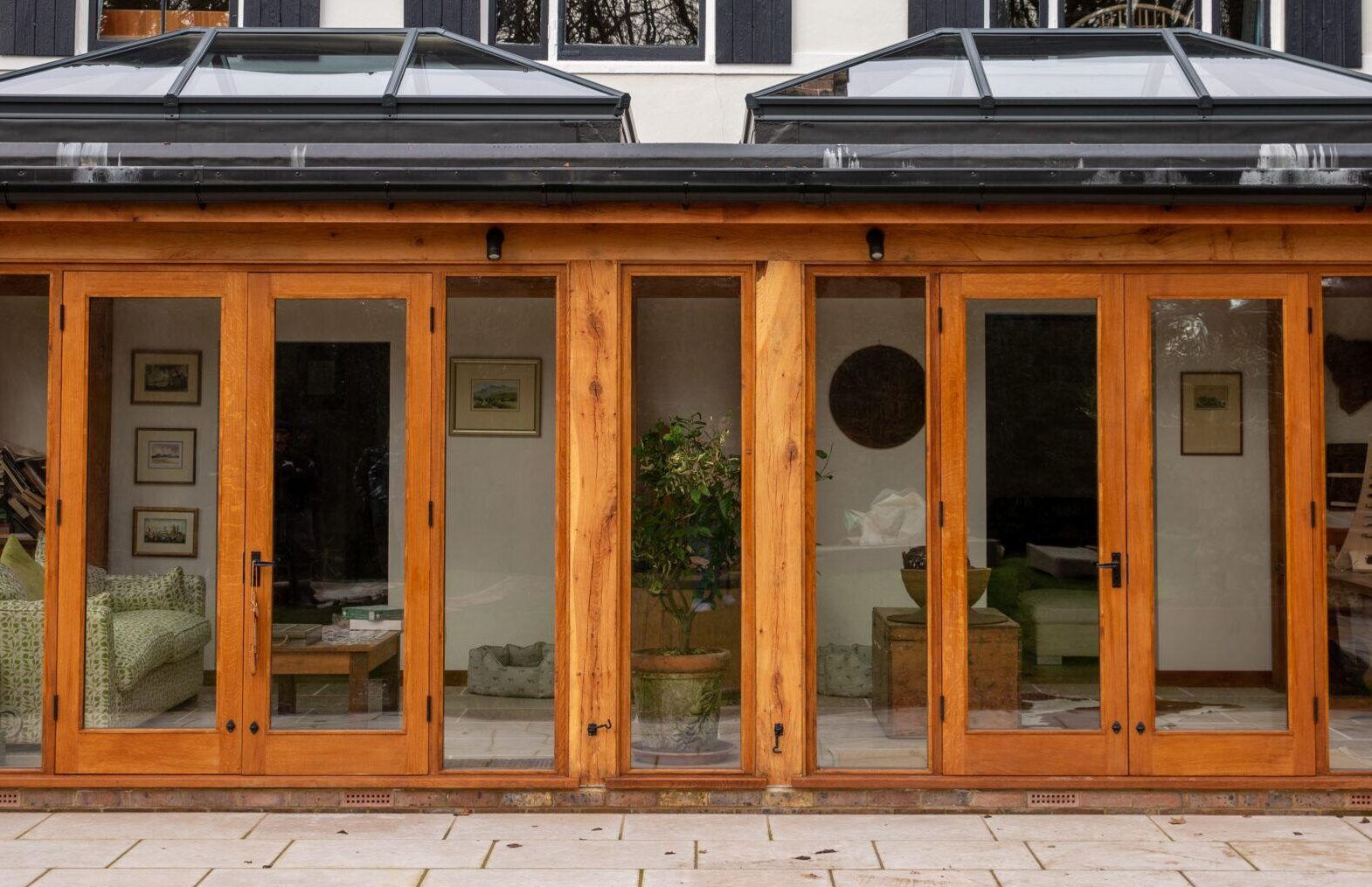
Architectural Style & Features
Oak orangeries are defined by their architectural balance:
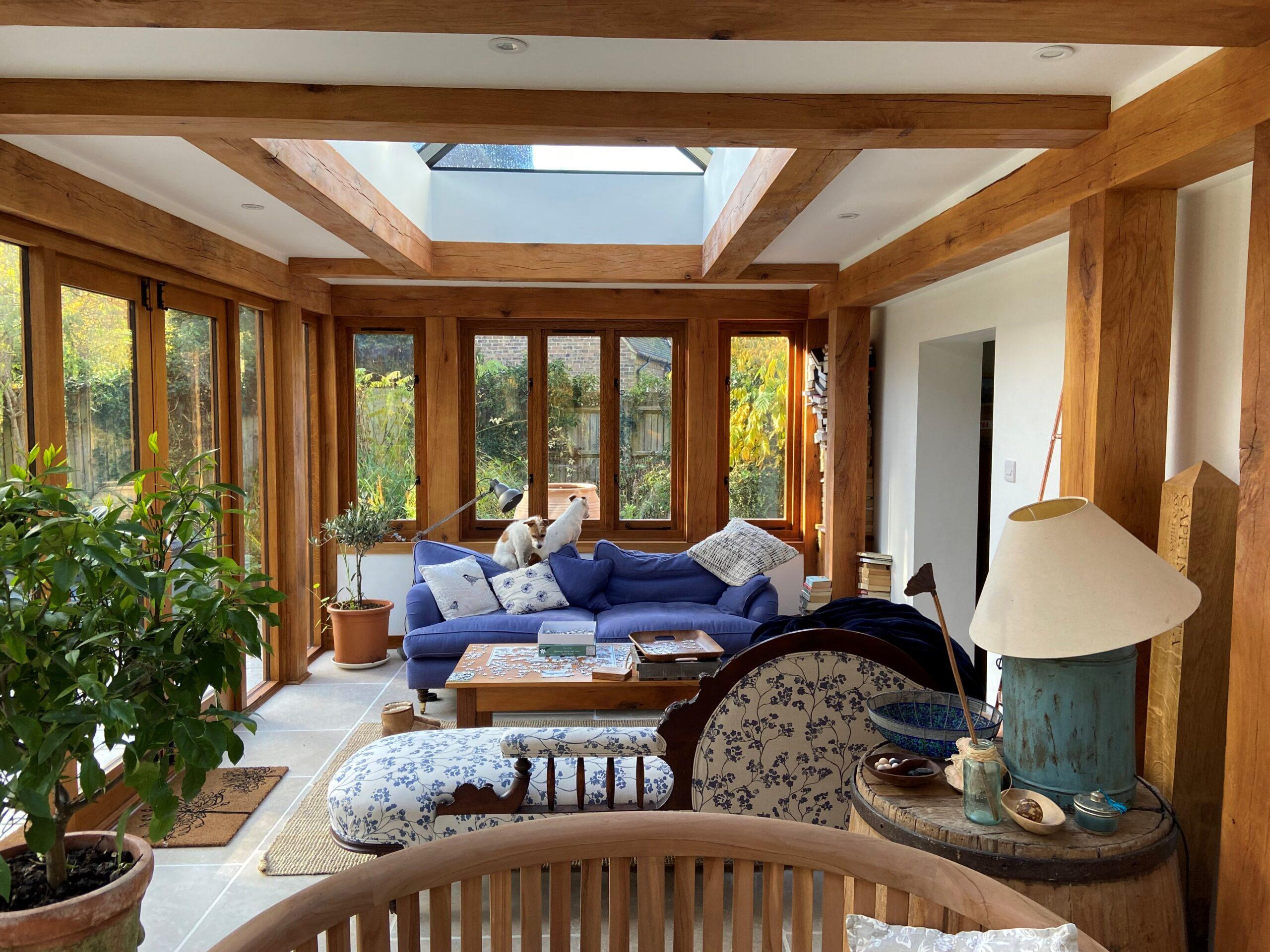
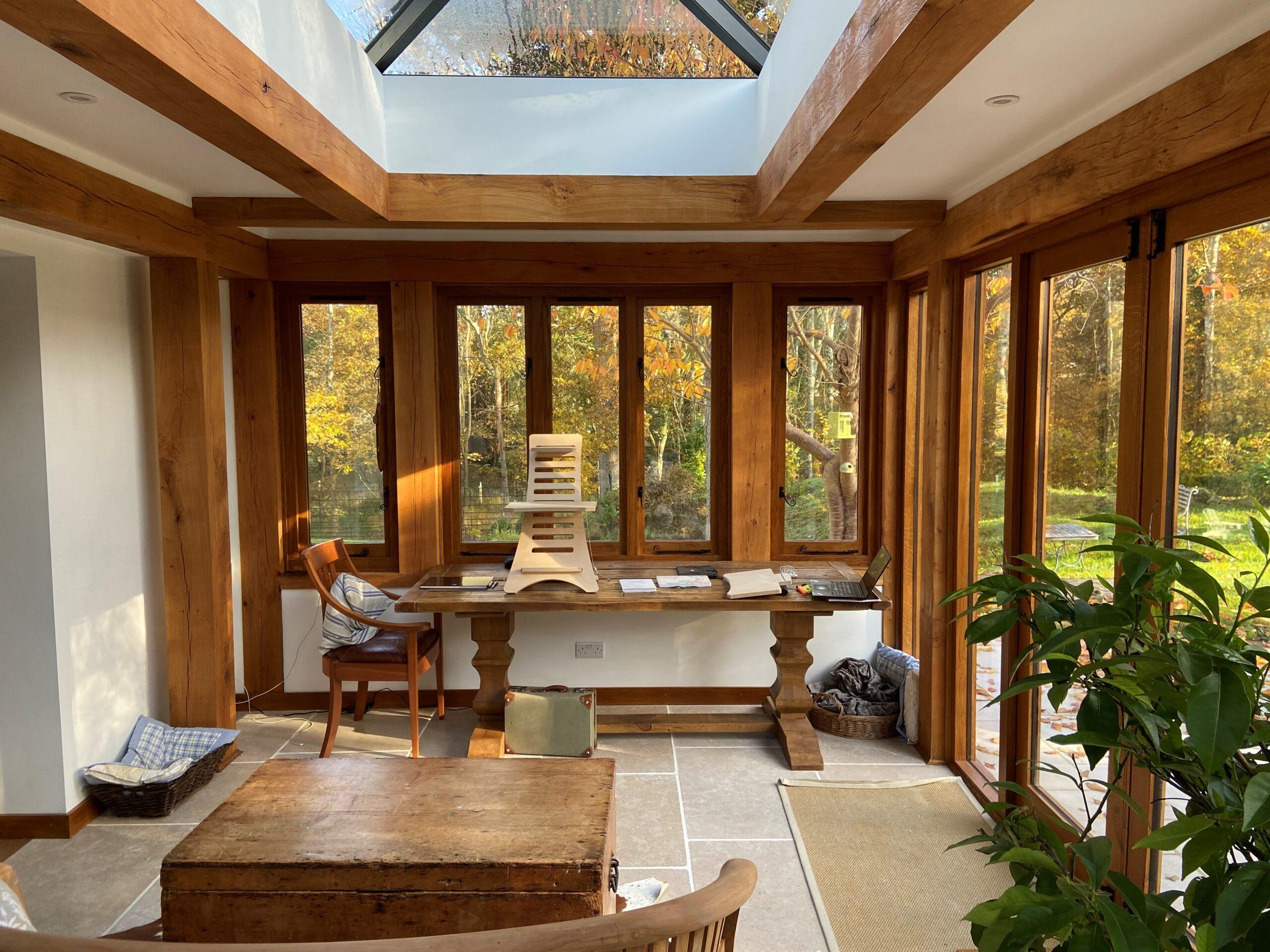
- Roof lanterns or glazed sections draw natural light deep into the space, while deep oak beams create a strong framework overhead.
- Large glazed doors and windows open directly onto the garden, softening the boundary between inside and out.
- Solid walls provide structure and privacy, allowing the glazing to feel purposeful rather than exposed.
Our goal in design is to deliver a space that unites traditional detailing with contemporary proportions.
How You’ll Use the Space
Oak orangeries are often designed as kitchen extensions, dining areas, or garden-facing living rooms where light and space are a priority. Unlike more lightweight structures, they are built for year-round use, offering a comfortable and usable room in all seasons.
The combination of glazing and solid structure creates a natural connection to the outdoors without sacrificing warmth or enclosure.
Designing Your Oak Orangery
Every oak orangery is designed to suit the property it extends. We work closely with homeowners and architects to refine scale, proportions, and glazing layouts so the structure sits naturally alongside the existing building.
Careful consideration is given to roof design, openings, and how the space connects to the garden. The result is a considered extension that feels well-balanced and fully integrated with its surroundings.
Planning Permission for Oak Orangeries
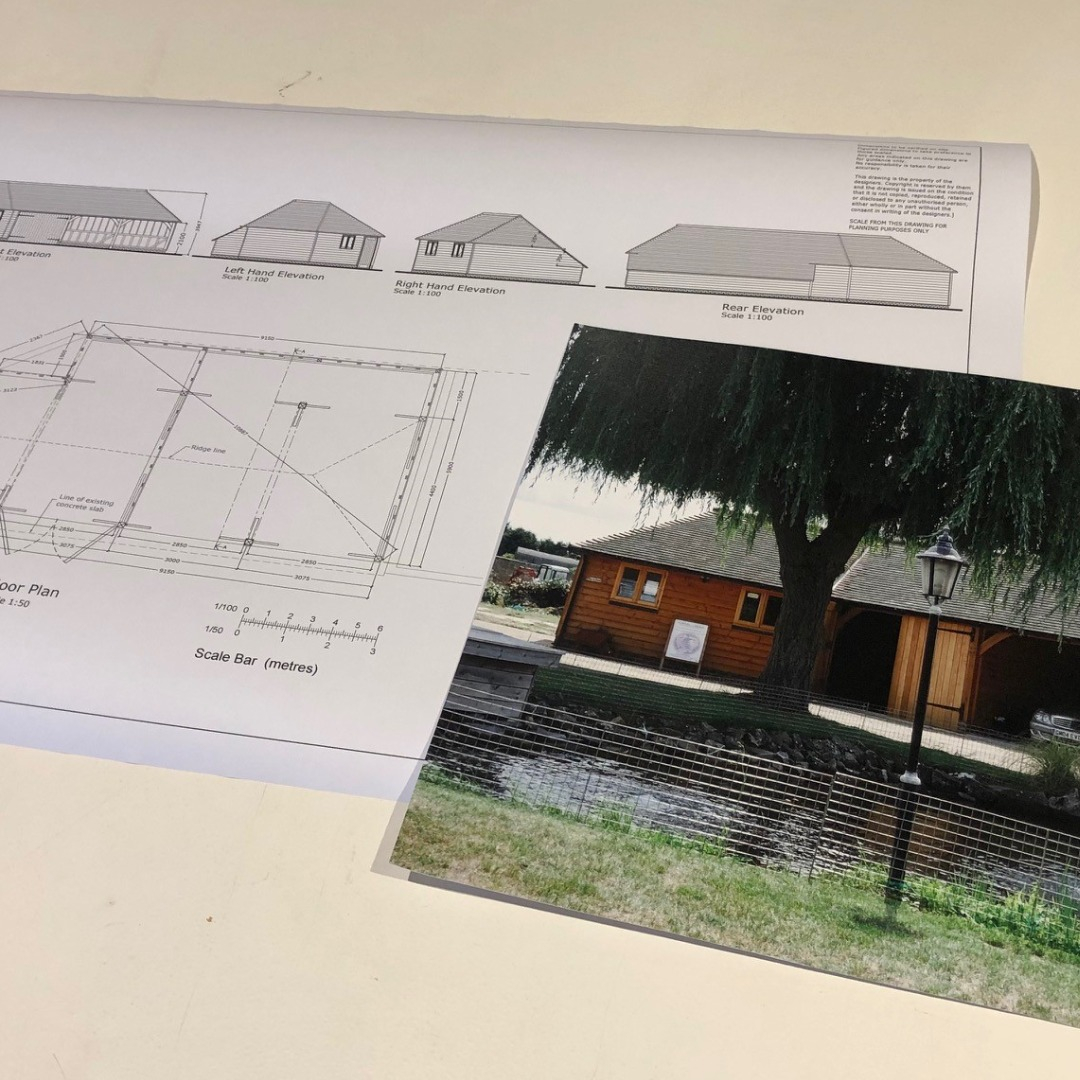
Oak orangeries are typically treated as extensions to the main property. In some cases, they may fall within permitted development rights, provided they meet certain size and positioning limits. Larger designs, or those that extend beyond these allowances, will require a householder planning application.
Properties in conservation areas, Areas of Outstanding Natural Beauty, or listed settings may be subject to stricter controls. It’s always advisable to seek guidance early. Our team can assist with initial design considerations, and we recommend reviewing our planning guide or speaking with your local authority before proceeding.
Our Orangery Building Process
- The process begins with an initial consultation to understand your space, requirements, and overall vision.
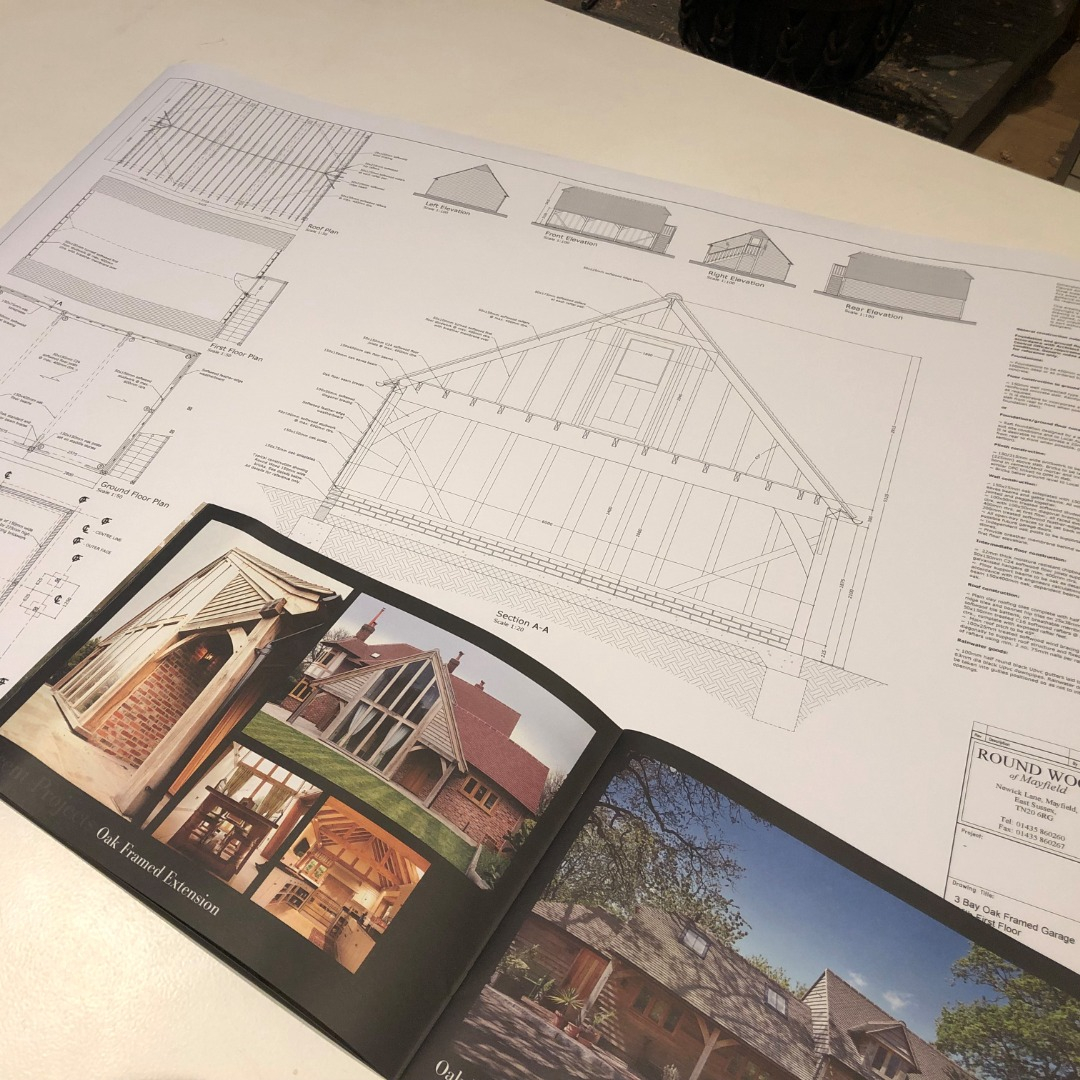
- From there, drawings are developed to define the design and structure, followed by planning where required.
- Once approved, the oak frame is crafted in our workshop using traditional joinery and pre-assembled to ensure accuracy.
- The frame is then delivered to site and erected by experienced installers, ready for glazing, roofing, and final finishes.
Why Choose an Oak Orangery?
An oak orangery offers a more substantial and considered alternative to a standard conservatory. The balance of solid structure and glazing creates a space that feels comfortable and usable throughout the year. Natural light is also drawn in through roof lanterns and large openings, without the room feeling overly exposed.
As well as adding practical living space, an oak orangery can build on the character of your home and contribute to its long-term value.
The Round Wood Approach
For over 30 years, we’ve been designing and crafting oak structures from our East Sussex woodland, supplying projects across the UK. Each frame is produced using traditional joinery and pre-assembled in our workshop before arriving on site. Our experienced team works closely with homeowners, architects, and contractors, offering clear guidance throughout.
Whether you require supply-only or a more involved level of support, we bring consistency and care to every project.
Start Your Orangery Project
If you’re considering an oak orangery, our team is here to help shape the next steps. Get in touch to request a quote, talk through your ideas, or share existing plans. We’re always happy to offer advice before you commit to a design, so let’s get started today.
Get a Quote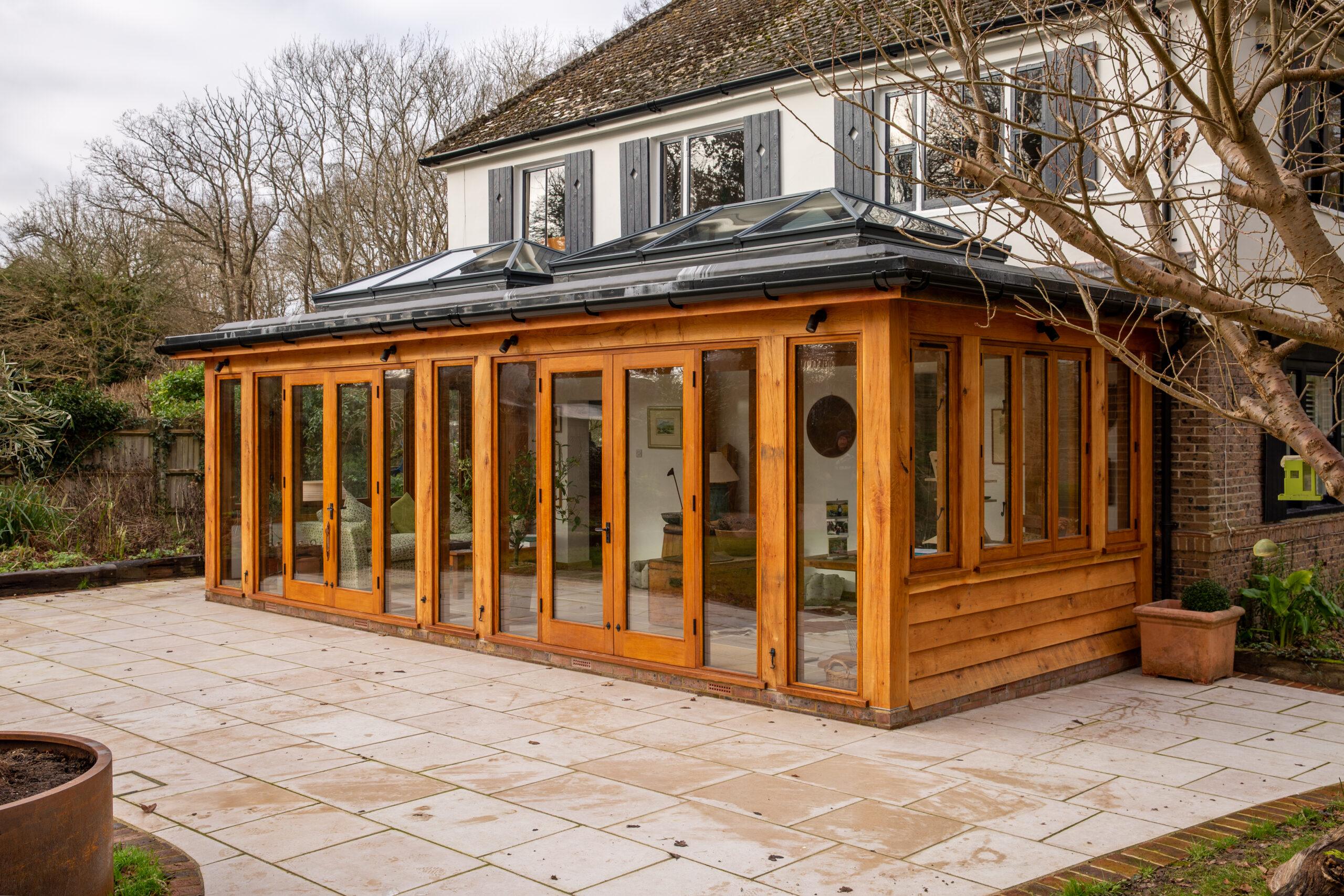
Frequently Asked Questions
Are oak orangeries warm in winter?
Yes, when designed and built correctly, an oak orangery can be used comfortably all year round. Modern glazing, insulation, and construction methods ensure the space retains heat in winter while still benefiting from natural light.
Can an orangery be used as a kitchen extension?
Yes, oak orangeries are often used to extend kitchens or create open-plan kitchen and dining spaces. The combination of light, structure, and connection to the garden makes them particularly well-suited to this type of layout.
Do oak orangeries need planning permission?
In some cases, an orangery can be built under permitted development rights, depending on its size and position. Larger or more complex designs will usually require planning permission. It’s always best to check with your local authority early in the process.
How long does it take to build an orangery?
Timescales vary depending on the size and complexity of the project. Once fabrication begins, the oak frame itself can typically be erected on site within a matter of days. The overall build will depend on groundwork, glazing, and finishing stages.
What is the difference between an orangery and a conservatory?
An orangery is more substantial in its construction, with solid walls and a central roof lantern, whereas a conservatory is typically made up of mostly glazing, including the roof.
Will the oak move or crack?
Some natural movement is expected in green oak as it dries over time. Small surface cracks, known as shakes, are a normal characteristic and do not affect the structural integrity of the frame. Many people actually see this as part of the material’s appeal.
You may also like
Oak Framed Offices
Find out moreOak Pergolas
Find out moreGet a Quote
Fill out our quick form below and we’ll be in touch shortly about a quote for your dream oak frame building.

